

Article by Startup Kitchen
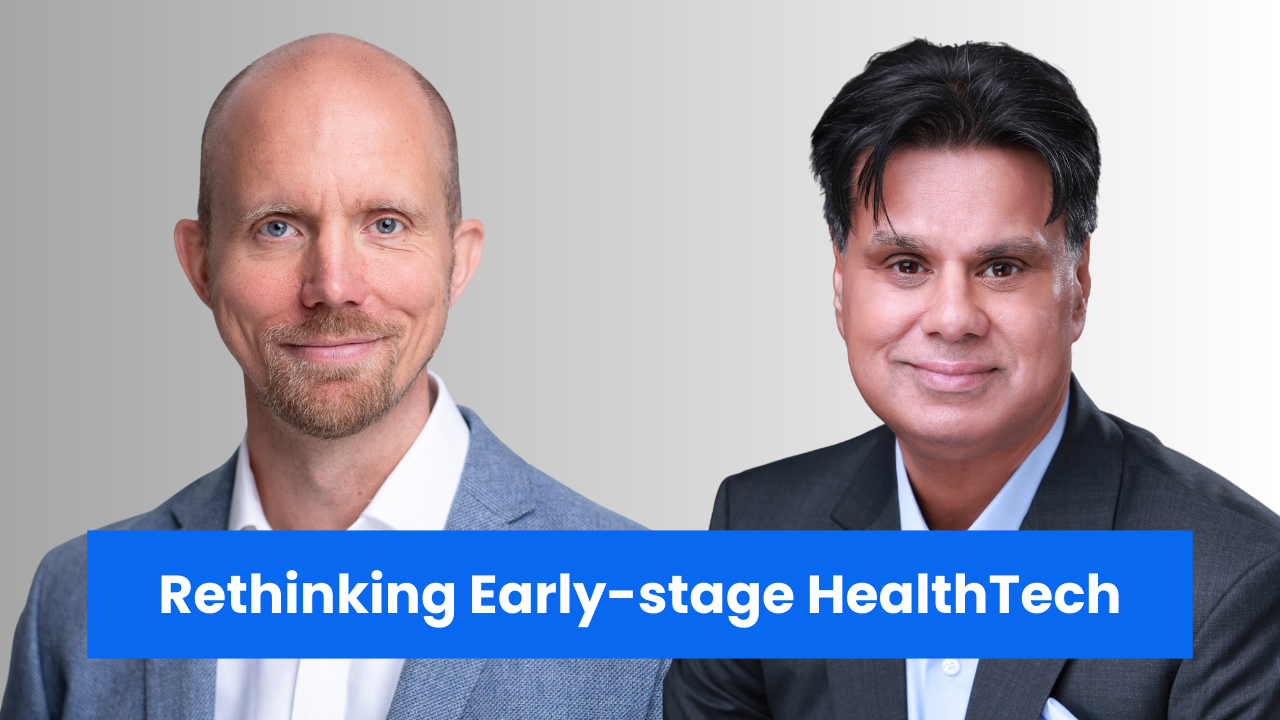
PurposeTech has announced that Professor Shafi Ahmed - elite UK surgeon, global health futurist, and Nobel Prize nominee - is joining the firm as a Senior Partner, alongside General Partner Zdenek Fred Fous, ahead of the launch of its second HealthTech-focused fund in January 2026.
While the announcement marks a significant milestone for the firm, it also formalizes a strategic conviction shaped by PurposeTech’s first fund: that healthcare requires a fundamentally different investment logic than most technology sectors. While traditional venture capital has successfully fueled exponential growth in enterprise software, fintech and consumer tech, its growth-first playbook often struggles to translate into healthcare contexts, where progress is predominantly constrained by trust, safety, evidence and cautious adoption.
This structural mismatch between conventional venture expectations and healthcare realities is the catalyst behind PurposeTech’s second fund, focused entirely on HealthTech. Recognizing that the “hockey stick” growth curve is rarely compatible with the sector’s operational and regulatory dynamics, the fund has adopted a strategy centered on pragmatic realism.
Two weeks ago, Ahmed and Fous sat down for a candid conversation on how early-stage HealthTech investing needs to evolve; the perspectives from that discussion are distilled in this article.
The Truth Serum of Fund One
The insights shaping this new fund are grounded in the hard data generated by its predecessor. Fred explains how their first fund exposed the limits of applying standard tech-investment logic to healthcare and surfaced several key investment insights.
Over the last three years, his team reviewed about 3,000 early-stage ventures – achieving dense coverage of most super early-stage dealflow across their target verticals in the CEE region. The data revealed a clear insight: roughly 8% of the reviewed companies were founded by genuinely high-quality teams with strong domain expertise and real market relevance, yet most still failed to raise capital.
The reason wasn’t mediocrity; it was mathematics. Their addressable markets typically fell in the tens to hundreds of millions of euros – too small for traditional VC models that depend on billion-euro outcomes – also helping explain why PurposeTech’s first, VC-style fund invested in less than 0.4% of screened opportunities.
The consequence was predictable. Those strong entrepreneurs either pushed on with bootstrapping, often while maintaining day jobs, or attempted the VC gambit by pursuing unrealistic growth trajectories that healthcare’s realities can barely support.
As Fred notes, healthcare’s structural constraints – such as fragmentation, regulation, and complex reimbursement – make exponential “hockey-stick” growth rare; forcing early-stage HealthTech companies to chase it often leads to failure or burnout. “We’re dealing with people’s health and lives,” he says. “Companies can’t go and break things – this requires a fundamentally different approach and mindset.
A New Architecture: Profitability Over Hypergrowth
PurposeTech’s second fund is designed to succeed where the traditional VC model struggles. Its thesis moves away from the unicorn-or-bust mindset and focuses instead on building a portfolio of niche, profitable HealthTech companies – primarily in unregulated or lightly regulated (MDR Class I) segments such as preventive care, digital therapeutics, remote care and monitoring, productivity software for medical personnel, etc.
The strategy involves an approach called “seedstrapping”, which has recently gained increasing attention. The fund aims to provide the first and potentially last round of funding – typically under one million euros – enabling companies to reach break-even within two to three years. In practice, this means optimizing early for cash flow, reducing dependency on repeated fundraising and building operationally resilient businesses from the outset. This model aligns more closely with the more grounded and conservative realities of healthcare. The goal is to nurture companies that may not become decacorns in ten years but will grow sustainably, dominate their specific niches, and generate healthy profits.
By focusing on a clear path to profitability, steady liquidity, and active venture building, Fred aims for returns (IRR) of around 20% per year, but with far lower volatility than a typical VC fund. As the portfolio will be generating a few million euros annually in free cash flow in ~8 years, it will be in a strong position for exits, buyouts, etc.
The Clinical Reality Check
This financial pragmatism is bolstered by the clinical expertise of Professor Shafi Ahmed. A London-based surgeon with 30+ years of experience in the NHS and global systems, Shafi understands that healthcare is nuanced and resistant to the aggressive disruption often favored by tech investors.
For Shafi, joining PT Capital is about ensuring that investments address genuine issues rather than just generating hype. He identifies the workforce crisis, the management of chronic disease, and the shift from hospital to community care, aka “the housepital”, as the critical challenges of our time.
Shafi envisions a future centered on the “housepital” – the shift of care from expensive clinical settings into the home and community, enabled by wearable sensors, AI, and remote monitoring. “This is simply the most exciting time to be alive in medicine,” Shafi asserts, pointing to the convergence of AI, rising consumerism in healthcare, and regulatory alignment that can finally democratize access to care.
Rethinking Early-stage HealthTech
The partnership between a veteran builder like Fous and a clinical visionary like Prof. Ahmed brings a granular understanding of why most HealthTech deployments fail. The issue is rarely technology or business model; it is far more often change management, adoption, and alignment with how stakeholders across the system actually allocate resources. The fund’s approach reflects this reality, with plans to allocate 10% of fund capital to portfolio synergies and venture building – not just investing in companies, but actively enabling them to navigate the system’s motivational, regulatory, and cultural barriers.
The vision for PurposeTech’s second fund – PT Capital – is to grow into a leading regional player in preventive care, where portfolio companies benefit from shared capabilities, coordinated support, and a collective mission to extend society’s healthspan.
.png)